

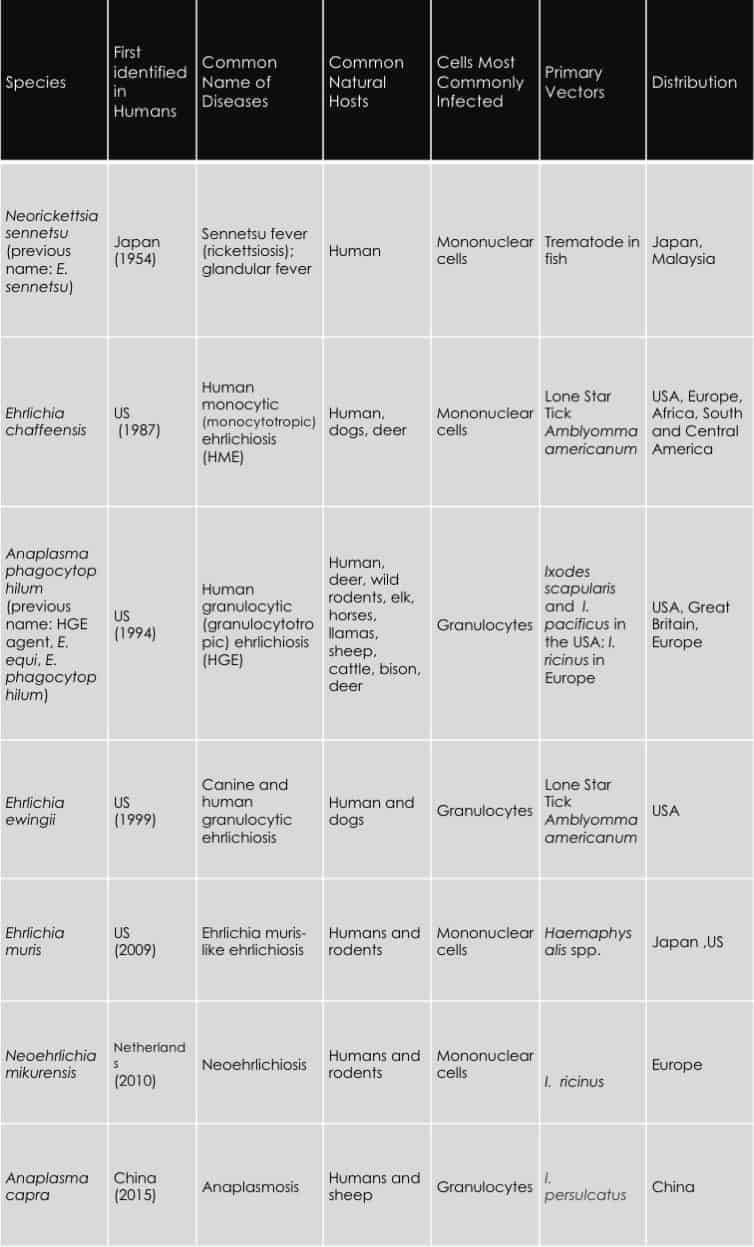
Ehrlichiosis and Anaplasmosis are tick-borne bacterial infections caused by intracellular bacteria belonging to the family Anaplasmataceae, genera Ehrlichia, and Anaplasma. [See table below for more details].
Human Ehrlichiosis is a disease caused by at least three different ehrlichial species in the United States: Ehrlichia chaffeensis (mononuclear), Ehrlichia ewingii (granulocytes), and Ehrlichia muris-like (mononuclear). Human Granulocytic Anaplasmosis is a disease caused by Anaplasma phagocytophilum in the US and Anaplasma capra in China.
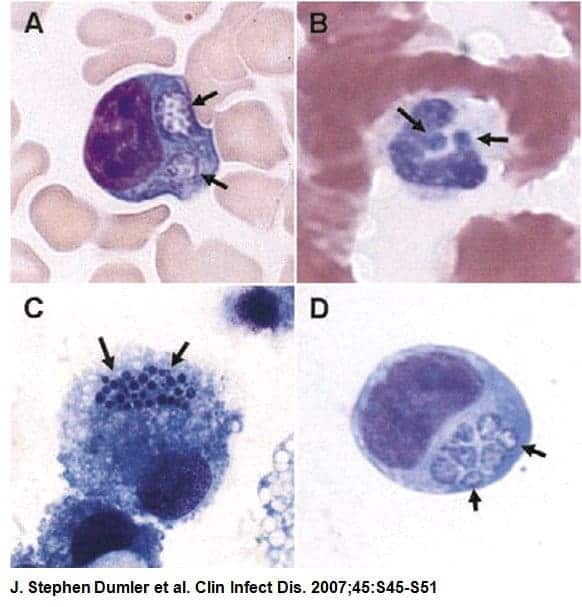
Ehrlichia chaffeensis (A and C; Wright stain) and Anaplasma phagocytophilum (B and D; Hema-3 stain) morulae (arrows) in peripheral blood monocytes (A), peripheral blood neutrophils (B), DH82 canine histiocytic cell culture (C), and human HL-60 promyelocytic cell culture (D).
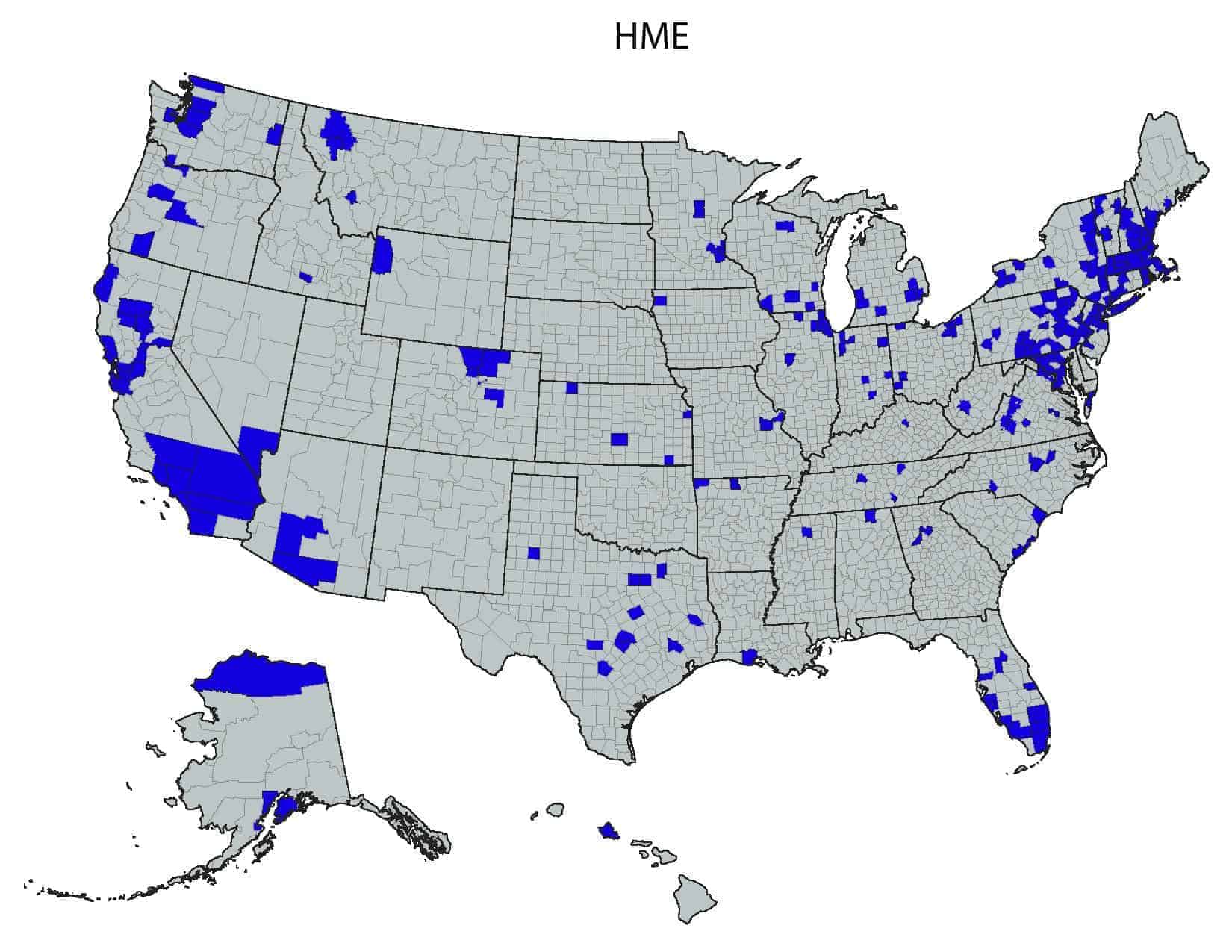
How Is Ehrlichia and Anaplasma Transmitted? What Are the Infected Regions?
Ehrlichia and Anaplasma are transmitted to humans by the bite of an infected tick. The lone star tick (Amblyomma americanum) is the primary vector of both Ehrlichia chaffeensis and Ehrlichia ewingii in the United States. The disease is transmitted to humans by tick bites primarily from the eastern black-legged tick (I. scapularis), the western black-legged tick (I. pacificus) in the US, and I. persulcatus in China. I. persulcatus, the taiga tick, is a species of hard-bodied tick found in Europe, central and northern Asia to the People’s Republic of China and Japan. The Dermacentor Variabilis (dog tick) has also been suggested in the transmission of both. Of the four distinct phases in the tick life-cycle (egg, larvae, nymph, adult), nymphal and adult ticks are most frequently associated with transmission of anaplasmosis to humans.

What Are the Symptoms?
Symptoms usually begin between 5 to 14 days after being bitten by an infected tick. They can include mild fever, headache, chills, malaise, muscle aches, nausea, vomiting, diarrhea, fatigue, loss of appetite, joint pain, confusion, rash, and cough.
Some people will find Ehrlichia symptoms in humans so mild that they never seek medical attention, and the body fights off the illness on its own. But untreated Ehrlichiosis with persistent symptoms can result in a condition serious enough to require hospitalization.
How Is Ehrlichia Diagnosed?
The diagnosis should be considered in patients bitten by a tick or have been in a tick-infested area and have any of the symptoms typical of these infections, even mild ones. Patients should be examined by their healthcare professionals. Physicians will use this information along with laboratory tests to find out whether a patient has Ehrlichiosis or Anaplasmosis, or perhaps some other tick-borne infection.
Click here on how to order a test kit from IGeneX. Both patients and physicians can order test kits.
FOR HEALTHCARE PROFESSIONAL: Click here for more information on the type of diagnostic tests for Ehrlichia or Anaplasma. Patients diagnosed with Ehrlichia or Anaplasma should also be tested for Lyme disease due to the fact that co-infections have been documented in patients.
Can a Tick be Tested?
At IGeneX, ticks can be tested for the presence of B. burgdorferi sensu lato group by a PCR test. Any tick, including the one that has been removed from a patient, can be sent to IGeneX for testing.
Click here for more information on how to test a tick.